tl;dr: Distribution-first media produces single-use content. Preservation-first makes recordings that are reusable. The archive demands the source be preserved.
In June 2025, at Funding the Commons, the Zk Av Club Recording Station activated in the real world for the first time. It introduced a simple idea: hold a space where people can record conversations and keep what they create.
We didn’t start with a fixed model or a complete plan. During Berlin Blockchain Week 2025, we showed up knowing that many details were still unclear.
We had to do the thing to understand what it actually is.
We volunteered at five different events over the course of two weeks. Sometimes we got invited just days ahead of time. We set up our equipment and started recording conversations.
But once we moved from recording into distribution, the problem became clear.
The story ended at publication. Once a recording became a video, it was effectively closed. There was no way to build on it, return to the source, or connect it to anything else.
It could circulate, but it couldn’t accumulate.
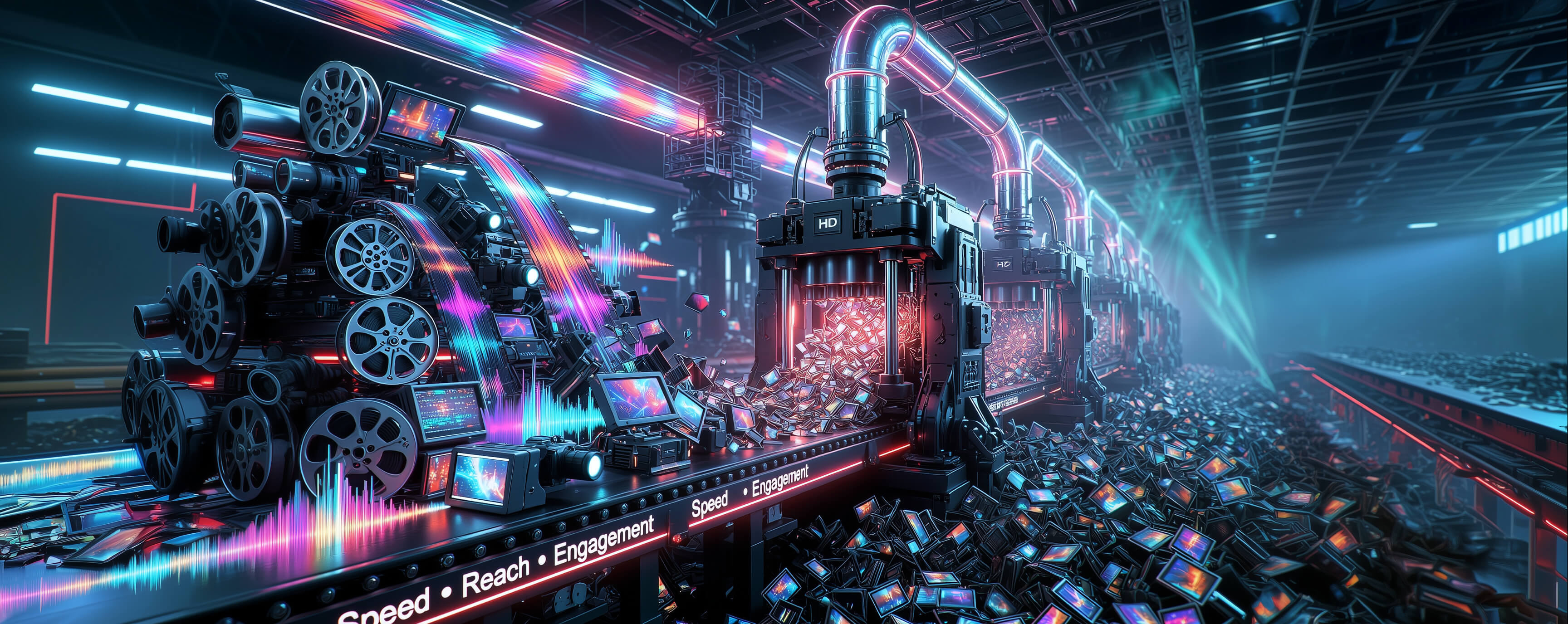
Most media pipelines today are built for distribution. Speed, reach, and engagement come first. Editing and compression happen early, collapsing recordings into finished outputs. What remains is single-use, disposable content.
We are building a preservation-first system. It prioritizes original source files and metadata, delays editing and distribution decisions, and treats recordings as durable, reusable documentation.
The cost became clear.
At Berlin Blockchain Week 2025, recording flowed straight into output. OBS sessions became finished videos. Compression, overlays, and edits happened immediately.
When we returned to those recordings, there was no source to be found. No way to revisit decisions, extract new cuts, or connect conversations across time. They could be watched, but not worked with. That gap only shows up when you try to use what’s available and find that the structure isn’t there.
This is what distribution-first production does: it turns recordings into fixed outputs, discards the source, and leaves you with files you can watch, but not reuse or build on.
A shift in method.
At Dark Prague, we made different decisions. We stopped trying to produce finished media in real time and focused instead on recording clean source material: camera footage and high-quality audio, without baked-in edits.
In Buenos Aires, at Sub0 and Devconnect, we refined that approach. The method held. But we still didn’t have a clear definition of what we were doing. We were running it before we knew what it was.
The bigger picture only became clear after, when we could step back and see what we had built.
Not everything we record should be part of the archive.
Some recordings meet the conditions for the archive and remain intact, structured, and reusable. Others reflect earlier stages of the experiment. They still matter, but they serve a different purpose.
A recording belongs in the archive when the source remains in its original form, without premature edits, and with enough structure to be found, understood, and reused over time.
Consent sets the constraint.
One constraint underlies all of this. The Zk Av Club Recording Station prioritizes the people who record with us.
Participants own their recordings. They decide what happens to them. They can take them, edit them, or choose not to publish them. The archive exists within those boundaries. It does not override them.
The experiment is alive.
Now we have structure, constraints, and a standard that emerges from practice.
And, the archive begins there.